
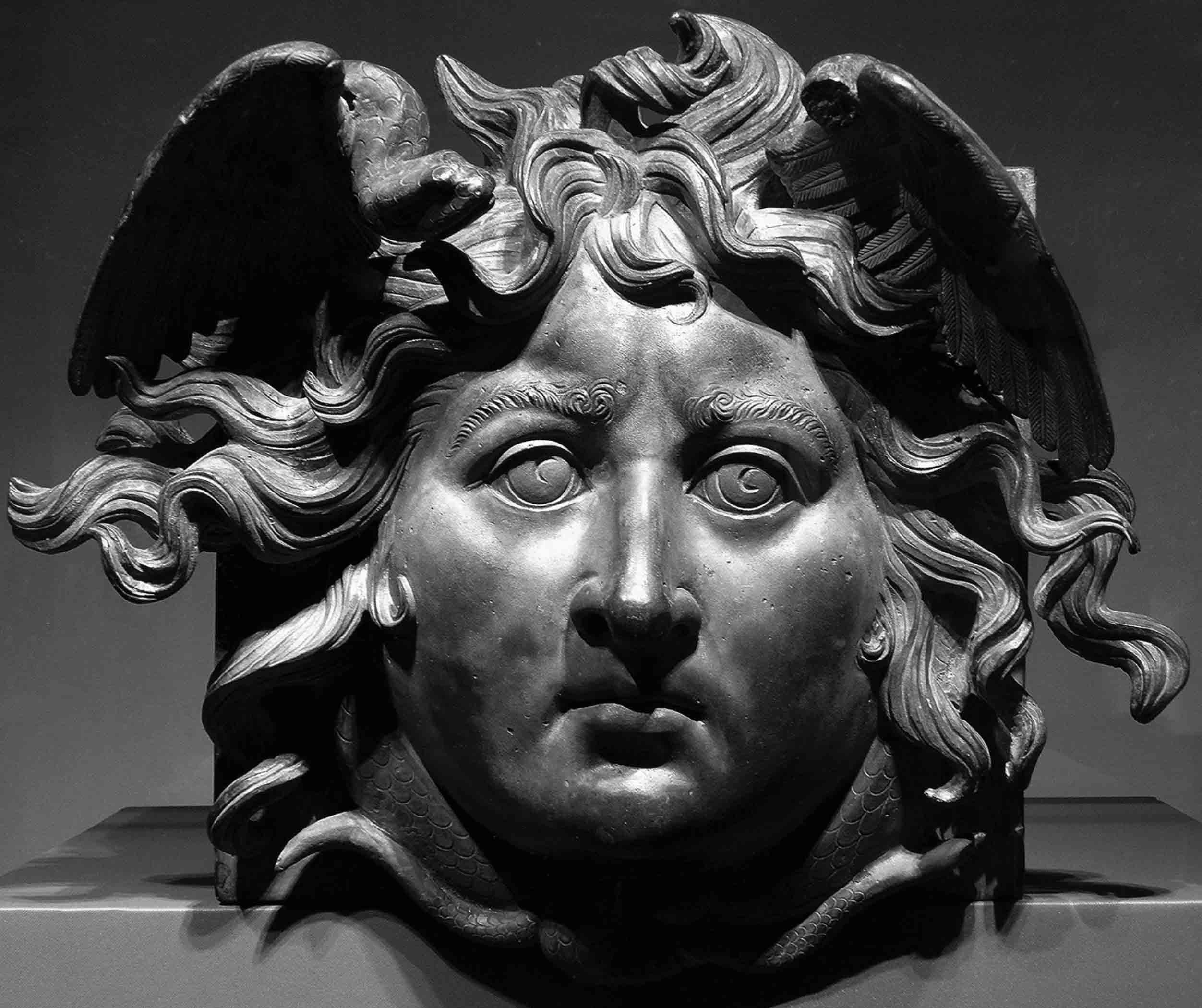
Bronze Head of Medusa, built by Caligula around 37-41 CE.
Medusa is best known from the story of her death, brought upon her by the hero Perseus who decapitated her with the help of the gods Hermes and Athena.
The earliest version of Medusa's death is from Hesiod's Theogony, which details her decapitation and describes her children Pegasus, the winged horse, and the great Chrysaor, who sprung from her neck.
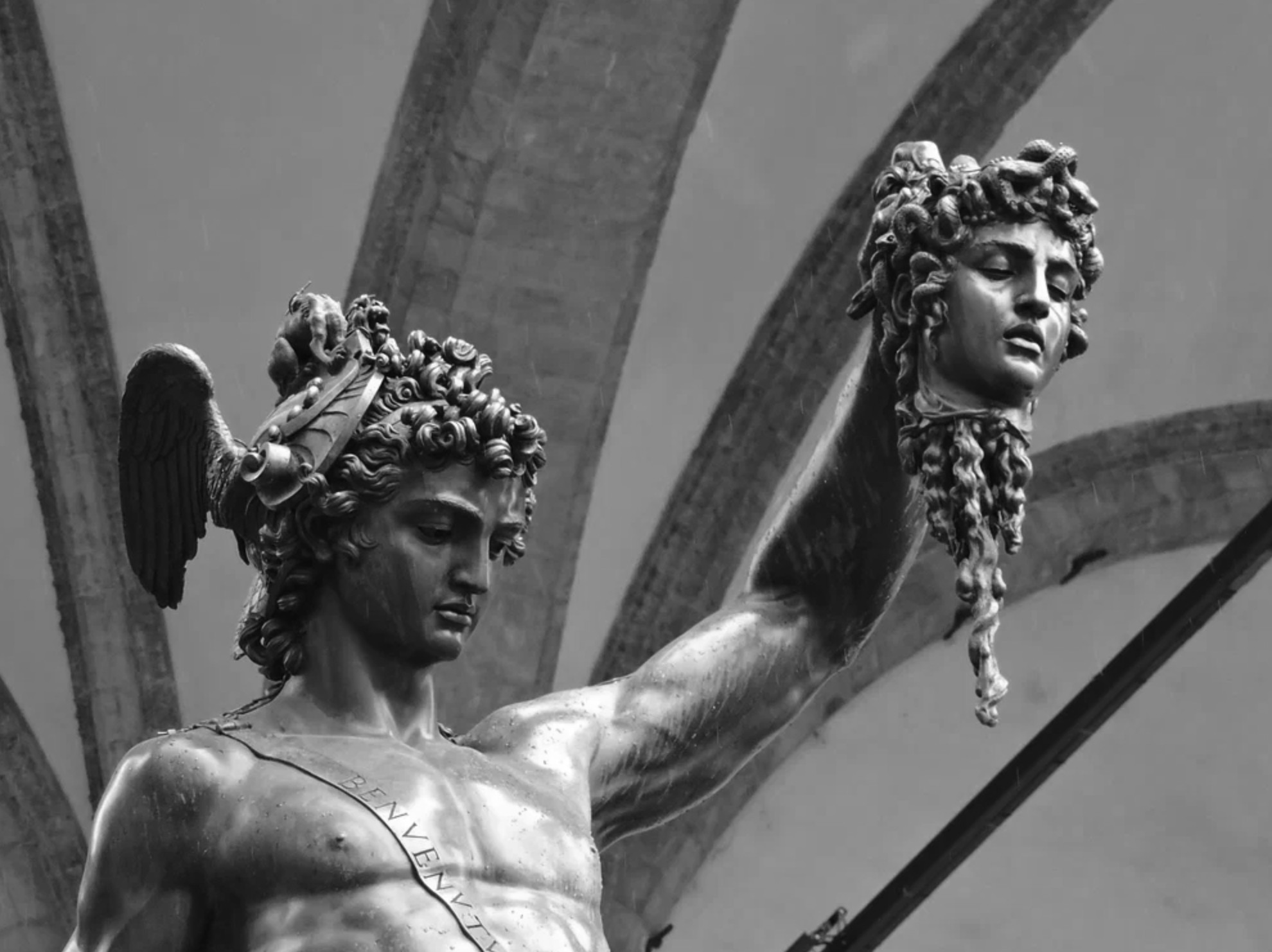
Perseus slain the Gorgon Medusa by Benvenuto Cellini 1545-54 CE, Florence.
Mentions of the head of the Gorgon in Homer's Iliad and Odyssey, which were originally part of the Greek oral tradition before being committed to writing sometime in the 8th century BCE, hint at a long history of the story of the complex character of the Gorgon Medusa.
Partially quoted from https://www.worldhistory.org/Medusa/
Written by Kelly Macquire
---
The creation progress of 'Medusa'
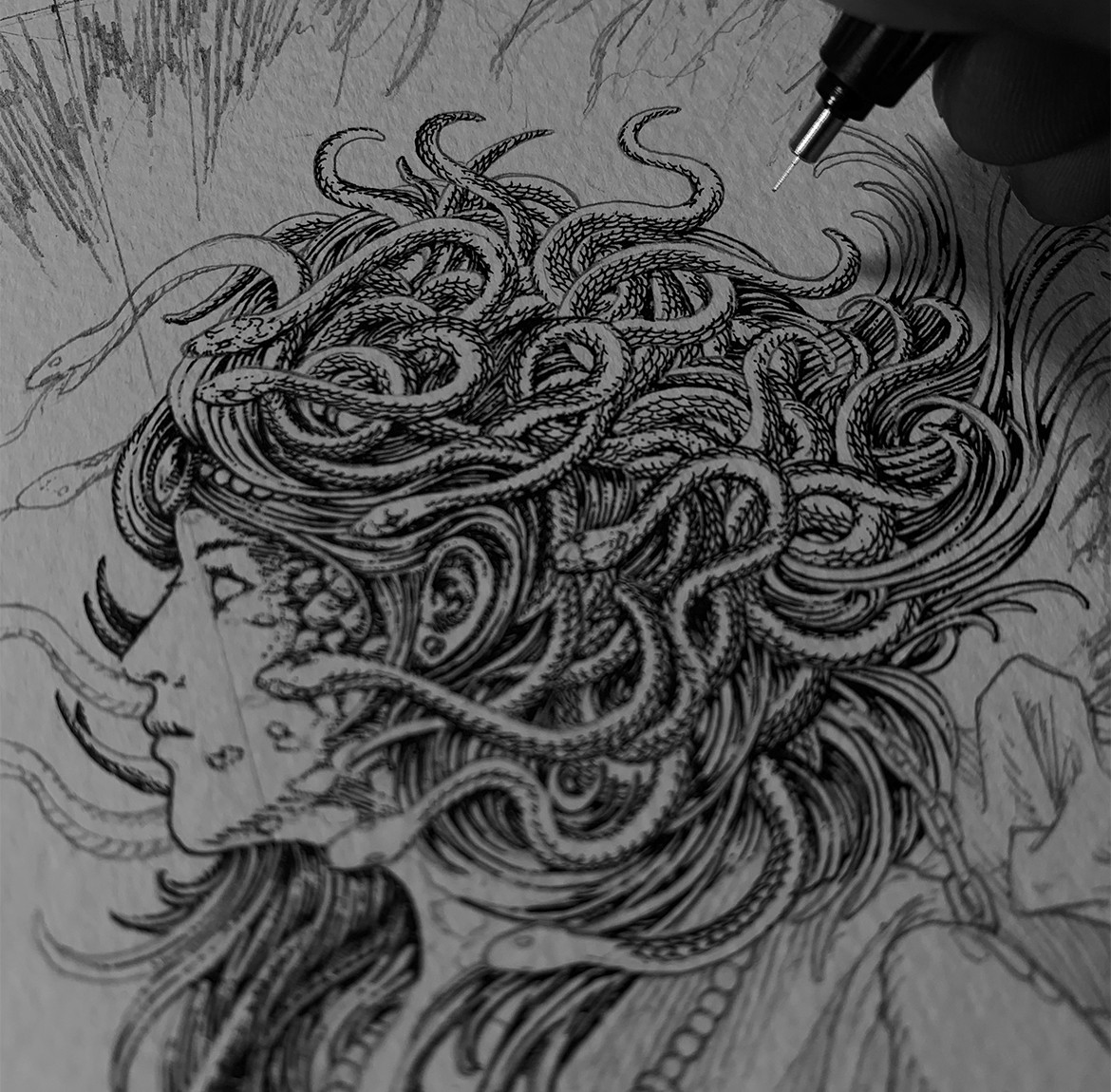
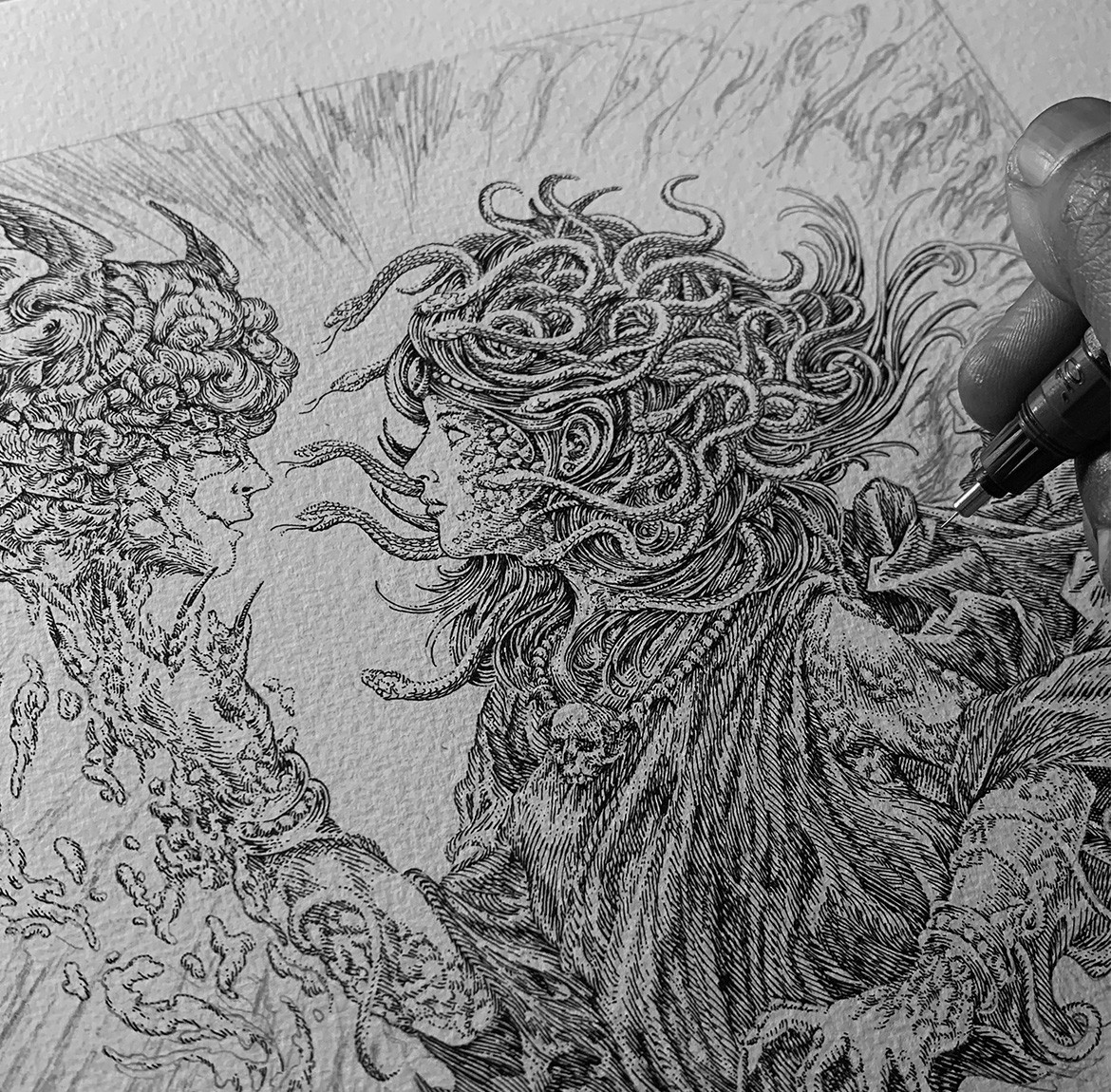
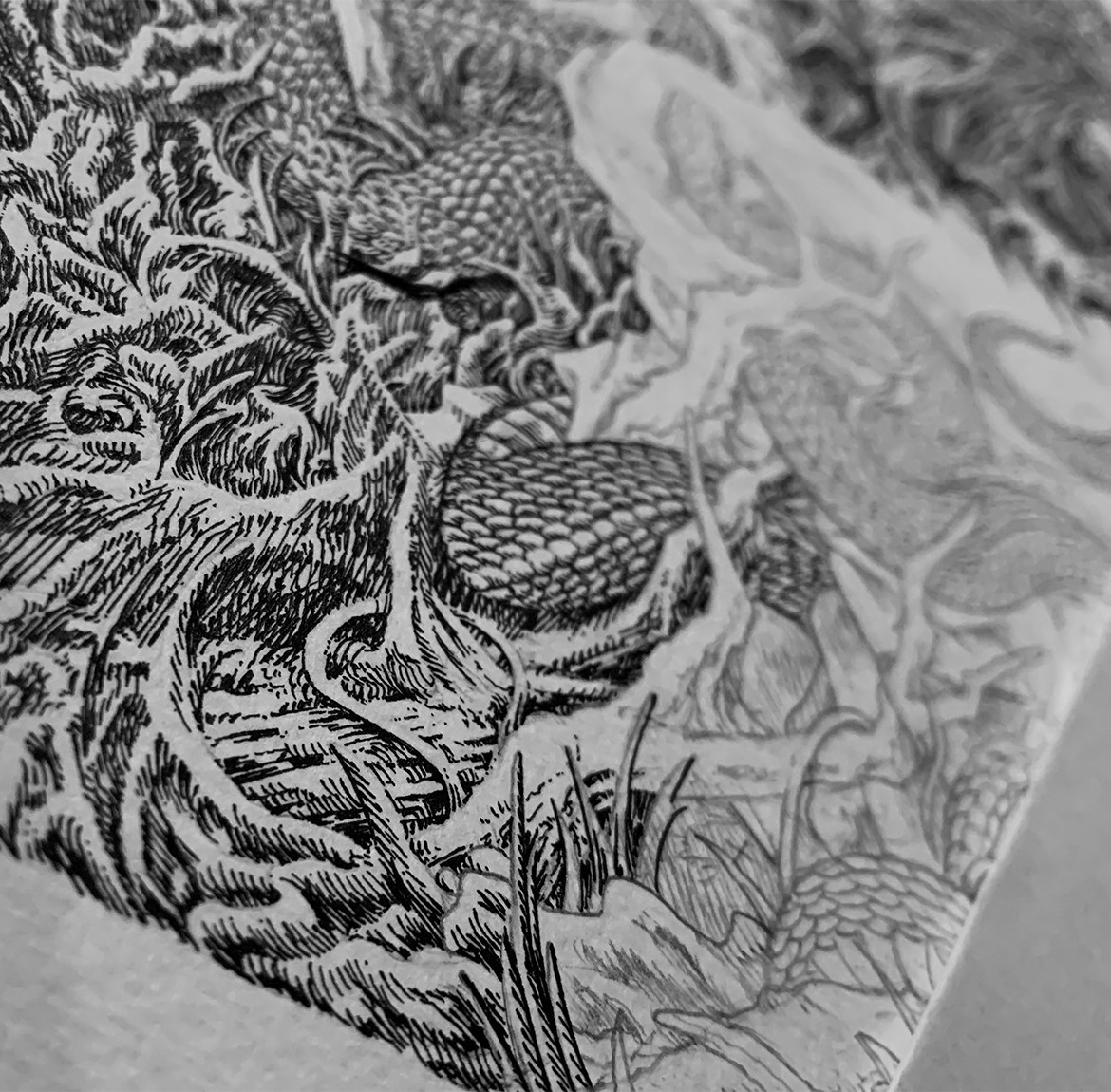
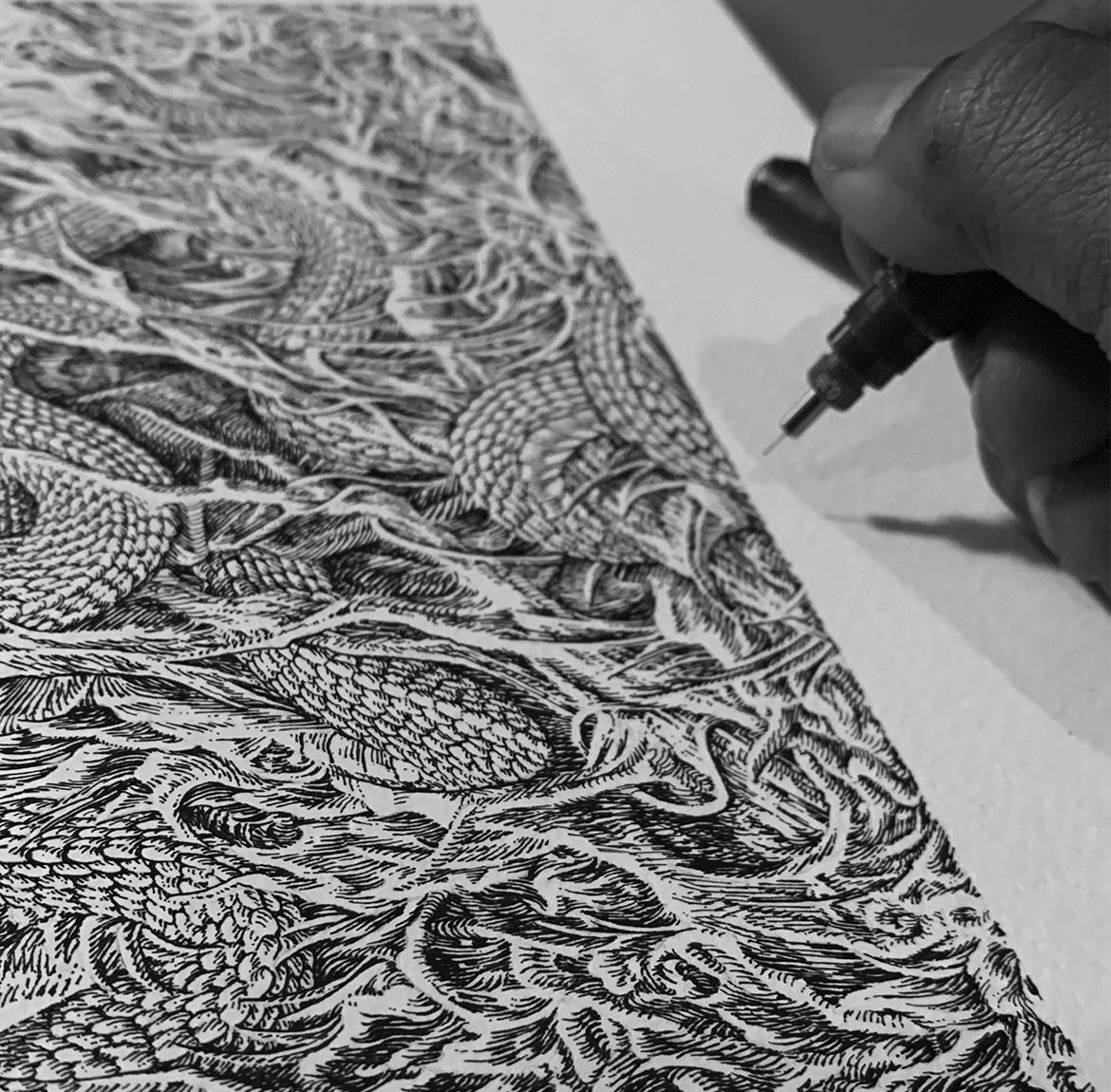
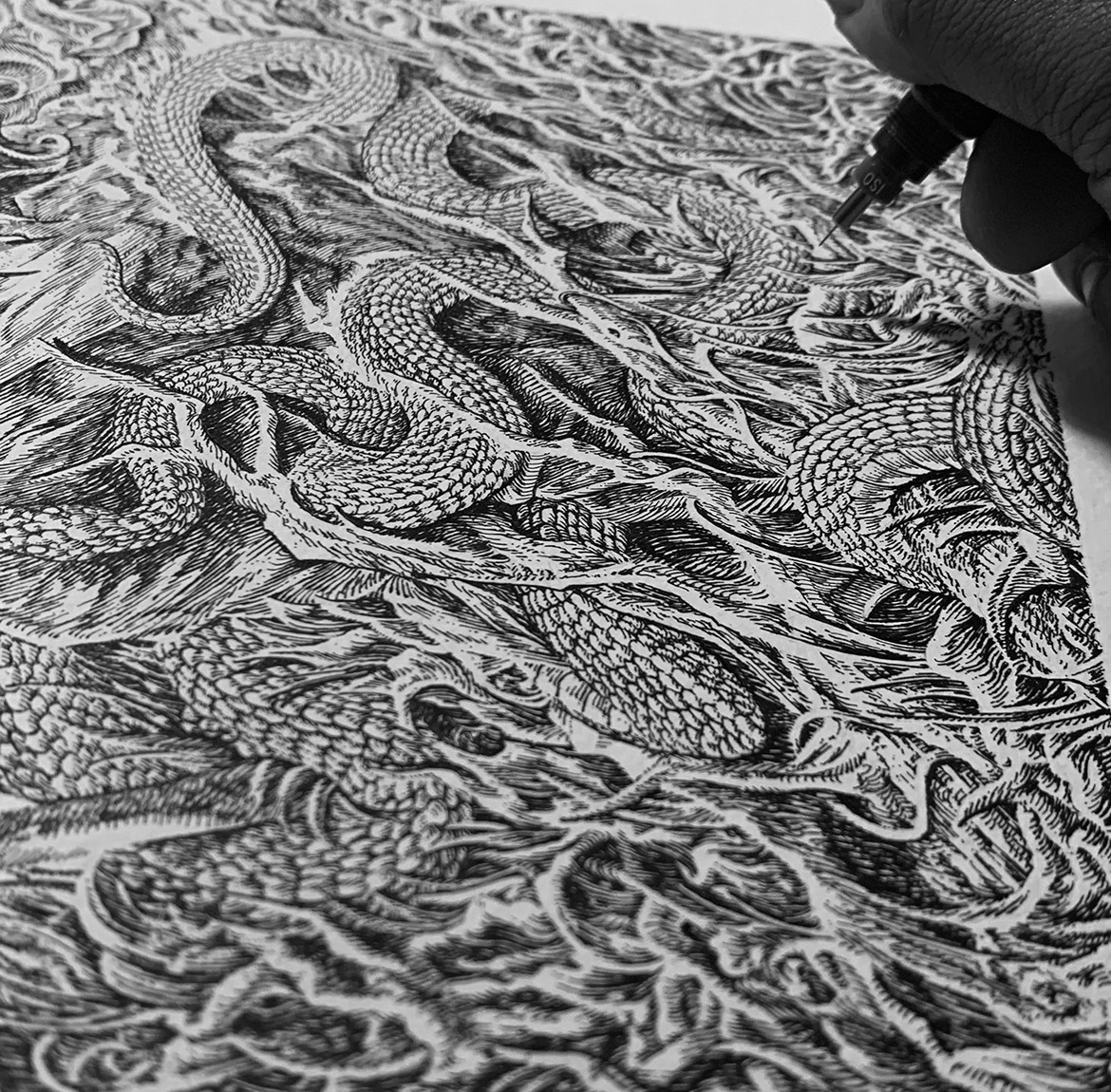
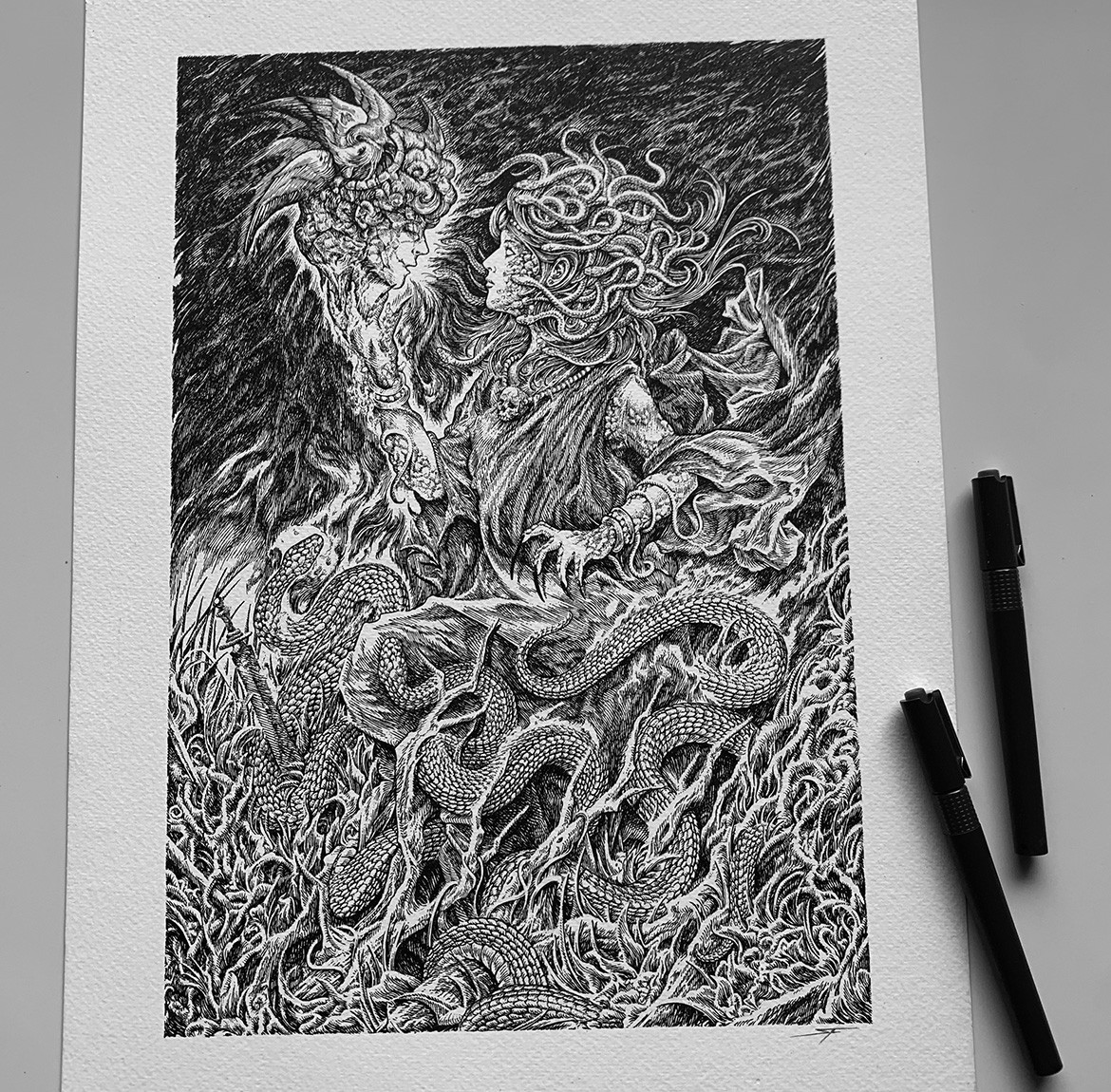
Final illustration, pen on Montval, 2023-2024
A REQUIEM FOR THE FORGOTTEN
To the depths of sorrow she fell, crowned with serpents, cursed by the gods,
yet rising from despair to defy her tormentors.
Medusa, the voice of every silenced woman,
whispers through eternity–
'I AM NO VICTIM, I AM THE STORM'
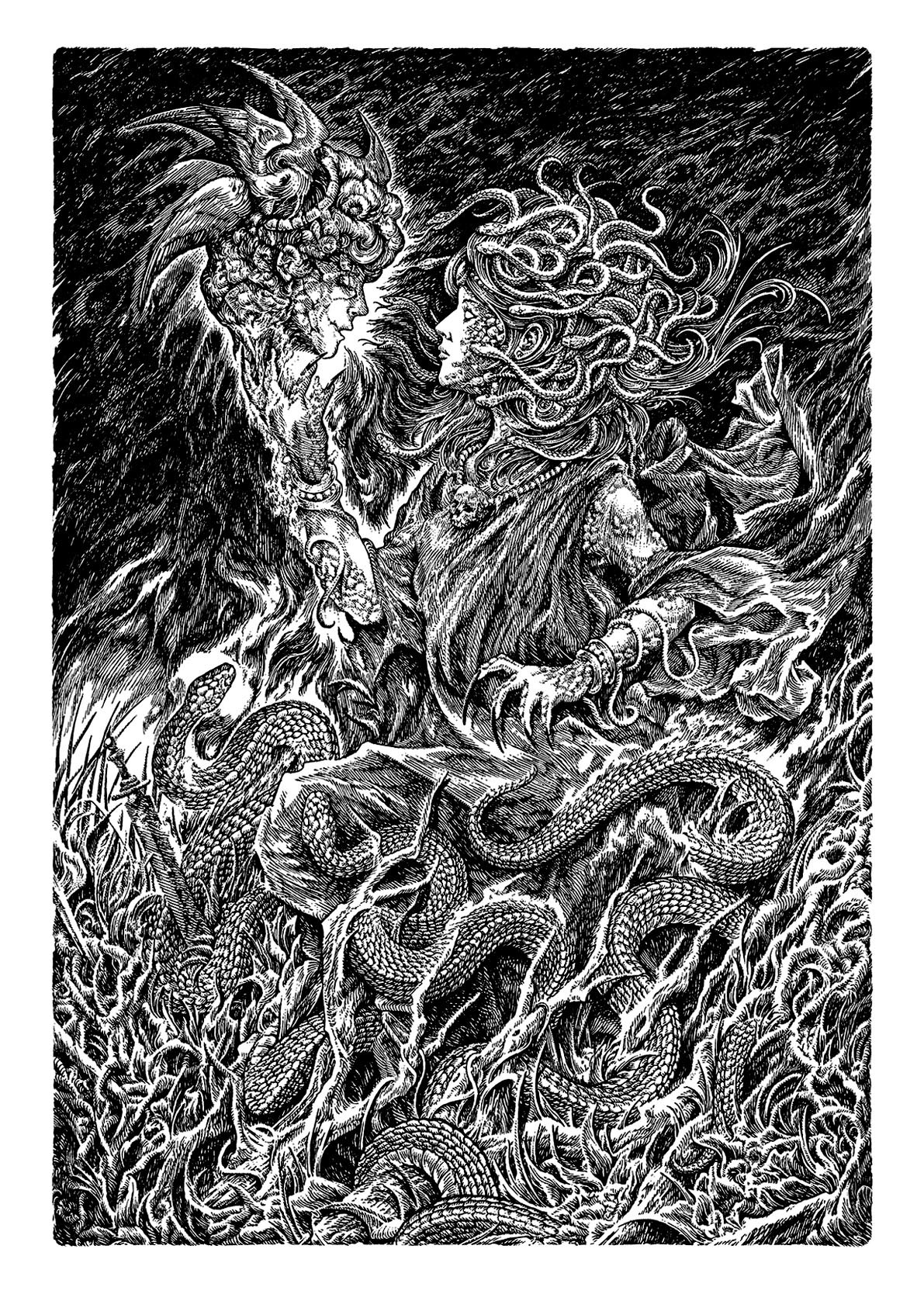
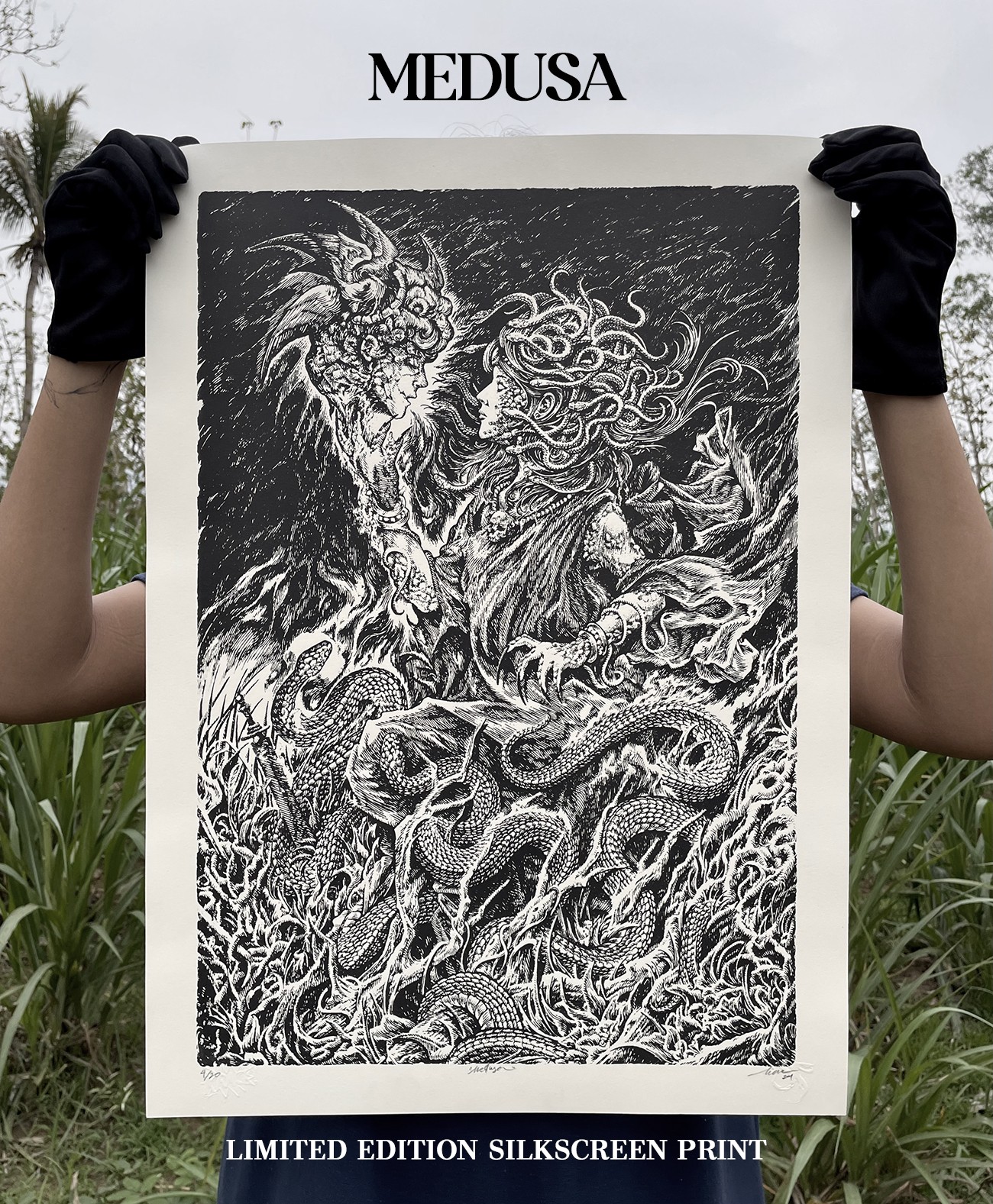
'Medusa' artwork by Septian Fajrianto, 2024.
Cursed not with weakness but with strength unyielding, Medusa bore her tragedy like armor forged in flame. The serpents that writhed upon her crown sang of anguish turned to power, their hisses echoing the defiance of a heart unbroken.
Perseus, her would-be slayer, wielded his curse as a weapon–but in her resilience, she turned it against him. His blade faltered against her scales, as unyielding as the fortitude etched into her soul. Her tale transcends the sorrow of her curse, reclaiming the narrative of a woman wronged yet undefeated.
Once vilified, she stands victorious, her serpentine crown a symbol of her unyielding power and rebellion against a world that sought to diminish her. Medusa embodies the voice of those wronged, reclaiming her narrative against patriarchal mythos. The flames and shadows engulfing the image signify her burning rage and the death of inequality's oppressive gaze. This is not just a tale of vengeance–it is a call for justice, equality, and recognition of strength often overlooked. Medusa's lament becomes her battle cry: no longer the hunted, she is the victor in her tragedy, turning sorrow into strength, and silence into defiance.
---
---
Beneath the weight of starless skies,
She wept where broken silence dies.
Yet from her tears, a fire was born,
A queen arose where hearts were torn.
Her serpents sang, her gaze now steel,
The chains of sorrow she would unseal.
For curses fade, but strength remains,
In darkness ruled, her justice reigns.
Through tempests wrought by heavens' spite,
Her scales gleamed sharp, a shield of light.
No hero's jest, no shadowed blade,
Could shatter what despair had made.
Beneath her crown of hissing lore,
She rose where grief had reigned before.
A storm unleashed, her foes laid bare,
The curse they cast became her snare.
In darkness deep, her justice wakes,
Each whispered name, her vengeance takes.
No longer bound, no longer blamed,
The monster? No–queen proclaimed.
---

Words and poem written by Shabrina
based on 'Medusa' illustration created by Tian Fajrianto.
This illustration is dedicated to celebrating International Women's Day 2025.

About the artist: