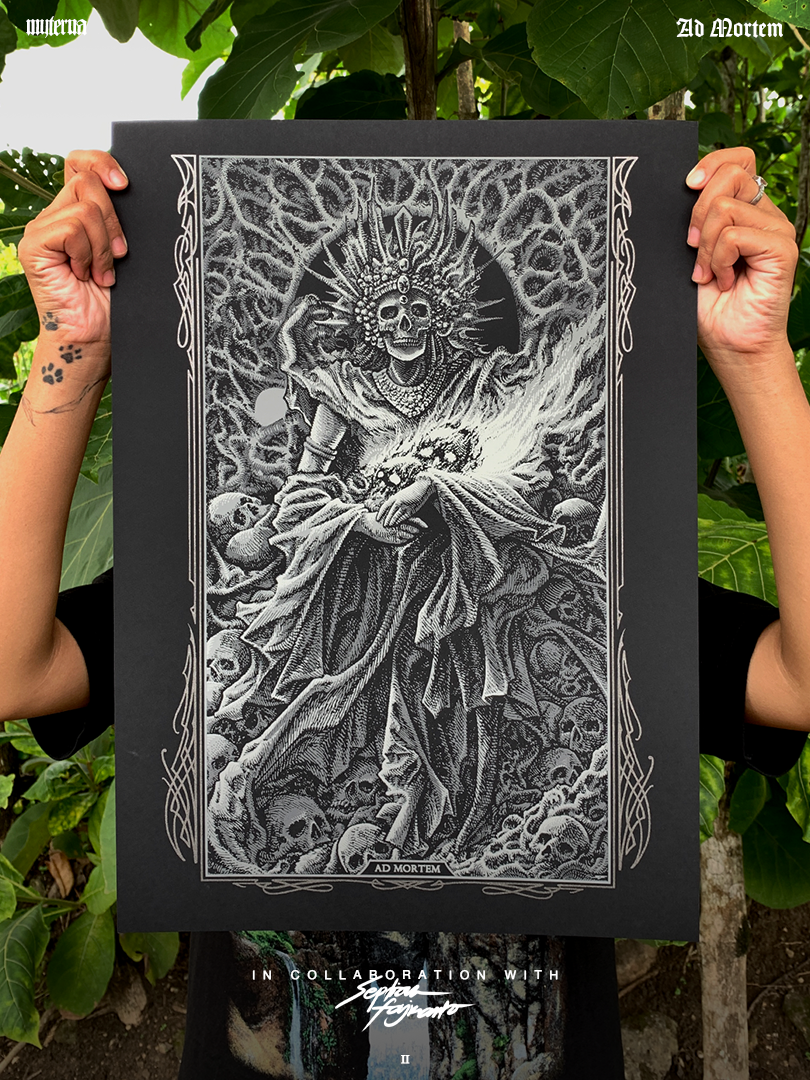

The term “mortem,” derived from the Latin word for death, rarely enters our thoughts without leaving a residue of unease. Even in abstraction, it summons a quiet fear, an unspoken reminder of life’s inevitable conclusion and the unsettling question of what, if anything, follows after existence fades.
Death is not an interruption to life, nor a tragic exception. It is its final and most honest form. Long before language, before history, before the human need to be remembered, death was already at work, methodical, impartial, and unending.
Civilizations rise and collapse, bodies decay, names disappear, yet death remains unchanged, indifferent to our fear and our longing for permanence.
What makes death unbearable is not its certainty, but its refusal to explain itself. There is no narrative closure, no reassurance. Only the slow understanding that everything we build, love, and protect is temporary and that the universe will not mourn our absence.
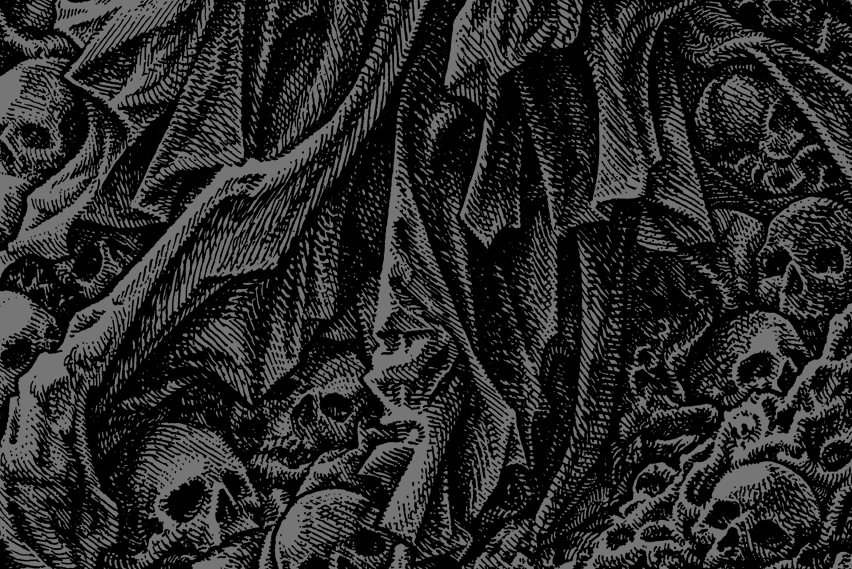
Is death merely a predetermined fate, or is it the quiet, irreversible momentum of life itself, moving forward without pause, carrying every human who has ever lived toward the same final threshold?
This question does not belong to biology alone, nor can it be confined to theology or philosophy. It exists in the space between breath and absence. Seneca once argued that death is not an aberration but a law of nature, something to be met not with resistance, but with lucid awareness. To contemplate death, for him, was not to surrender to despair, but to strip life of illusion.
Martin Heidegger approached death not as an event waiting at the end of time, but as a condition embedded in every moment of being. Sein zum Tod—being-toward-death, suggests that we are always already moving toward our own disappearance. Authenticity, in this sense, is born not from hope, but from the courage to live under the constant shadow of finitude.
In Islamic philosophy, particularly in the reflections of Al-Ghazali, death is not an annihilation but a passage, solemn, unavoidable, and ordained. The Qur’an reminds us with uncompromising clarity that every soul shall taste death. There is no negotiation, no exception, only submission to a certainty greater than human will, and a reckoning beyond worldly permanence.
Eastern philosophies, such as Buddhism and Hinduism, dissolve the finality of death into repetition. Through Samsara, death becomes a threshold rather than a terminus, one turn in an endless cycle of birth, decay, and rebirth. Liberation (moksha) is not achieved by escaping death, but by fully comprehending its grip on existence.
Ultimately, death resists a single meaning. It can hollow us with dread, paralyze us with despair, or strip life down to its rawest truth. Whether feared, revered, or rationalized, death remains the most honest mirror of human existence, one that reflects not comfort, but impermanence, and asks whether we have truly lived before everything dissolves into silence.

The question of what follows death persists not because it can be answered, but because silence is unbearable. It is a question suspended in absence, unreachable by science, untouched by proof, and endlessly rehearsed by a species unwilling to accept disappearance.
Across civilizations, humans have constructed afterlives with remarkable consistency. Different names, different landscapes, the same structure: passage, judgment, reward, punishment. These narratives do not necessarily point to truth, but to necessity. They function as resistance against the possibility that nothing awaits, that a life can vanish without consequence, without witness.
Religion systematized this resistance. Heaven and hell impose order where none is visible. A god, or gods, emerge not only as creators, but as guarantors of meaning. In death, they promise reckoning. Yet this promise reveals more about human fear than cosmic design: a refusal to believe that existence could end without explanation.
Beneath these beliefs lies the idea of justice, fragile and imagined. Life is chaotic, uneven, and often cruel. Death is therefore burdened with an impossible task to correct what life never balanced. Whether death delivers justice or simply erases everything remains unknowable. What is certain is that justice, like meaning, is not observable beyond belief.
Science offers no consolation. It reduces life to processes, to energy and matter in motion. When the body fails, nothing ascends, nothing judges. Heat disperses. Cells decay. Atoms re-enter systems that do not remember us. Continuity exists, but without identity, intention, or memory. Transformation, not survival.
Ad Mortem does not seek redemption in death. It does not promise peace, purpose, or transcendence. It remains with the possibility that death is final, indifferent, and empty and that the universe does not pause to acknowledge our passing. In this confrontation, meaning is neither discovered nor restored. It is exposed as temporary, fragile, and entirely human.


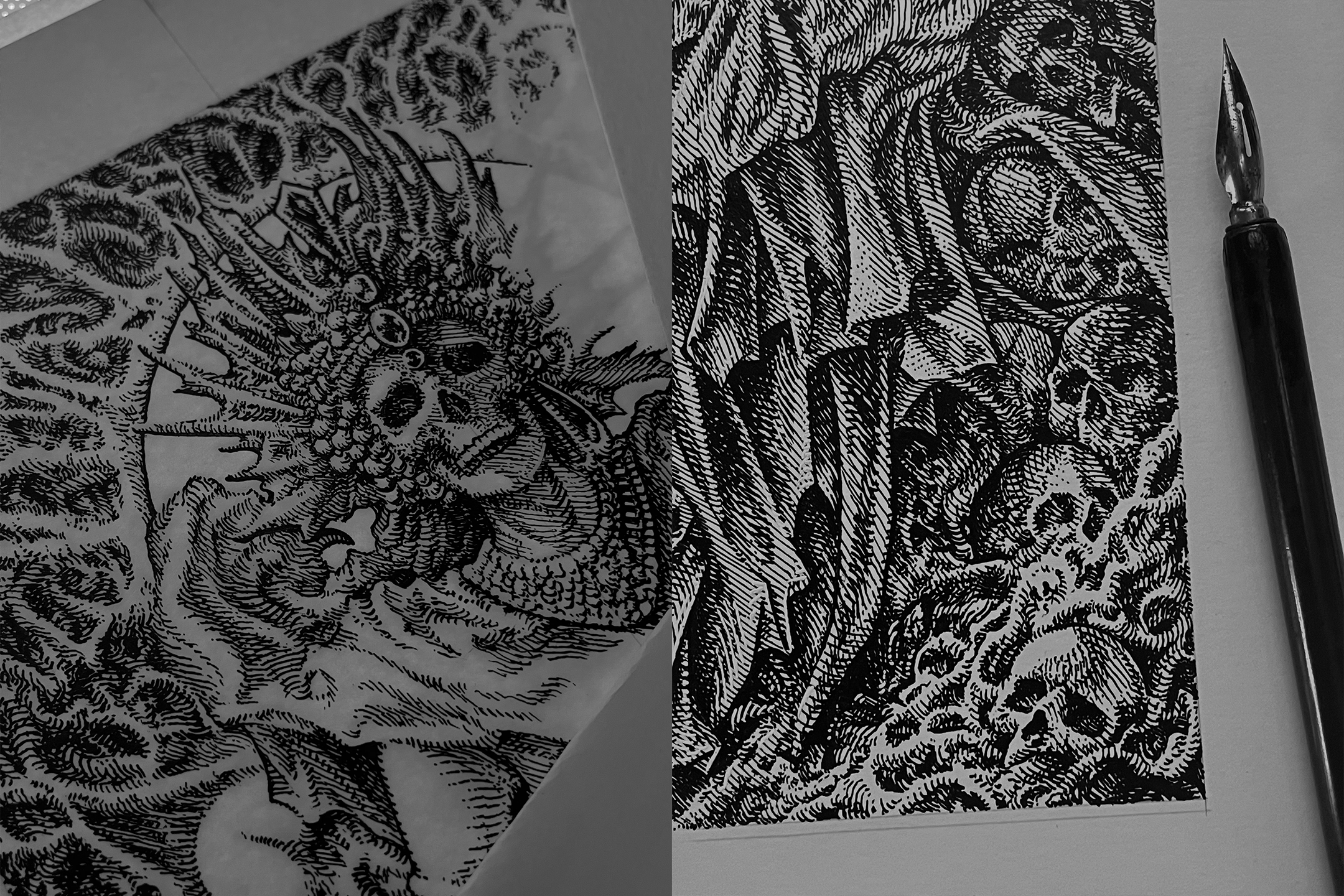
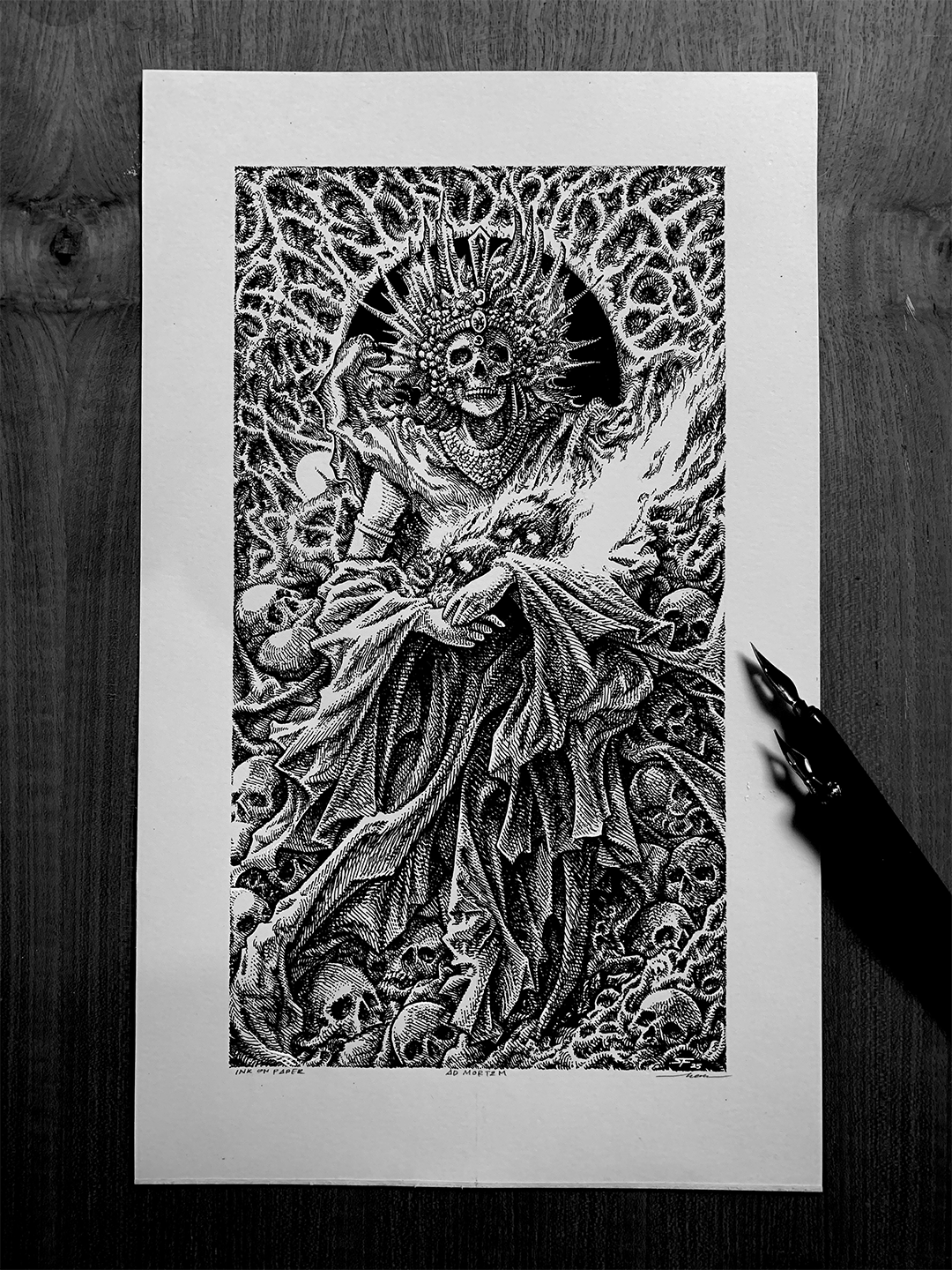

This artwork is a personal reflection that portrays death as a phase, the next chapter, a form of acceptance, and a poignant reminder of the preciousness of life.